How much does 1 kg of Vietnamese cashews cost today?
Vietnamese cashews currently cost an average of VND 350,000 to VND 550,000 per kilogram, depending on their size, processing method, and quality grade.
Raw white kernels and broken cashews are generally more affordable and commonly used as ingredients. Whole roasted cashews, including salted, dry-roasted, and flavored varieties, are usually priced higher because of their larger size, appealing appearance, satisfying crunch, and rich flavor.
Below is a general price range to help you understand the market and choose an option that fits your budget:
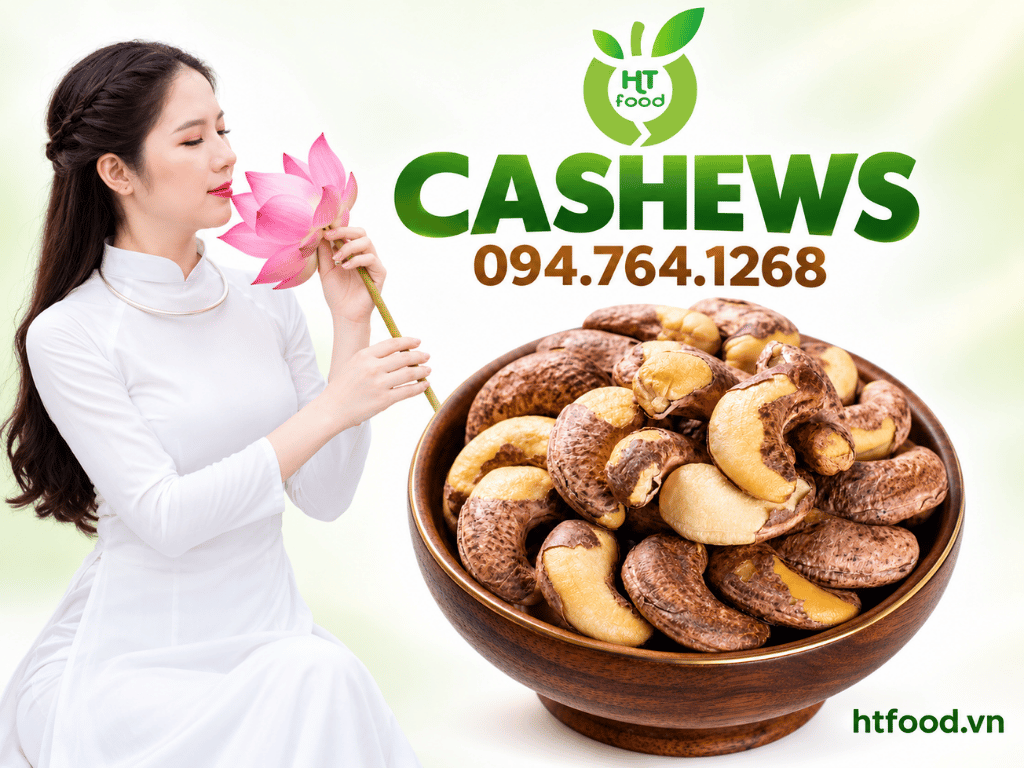
- Salted or dry-roasted cashews: VND 350,000–450,000 per kg.
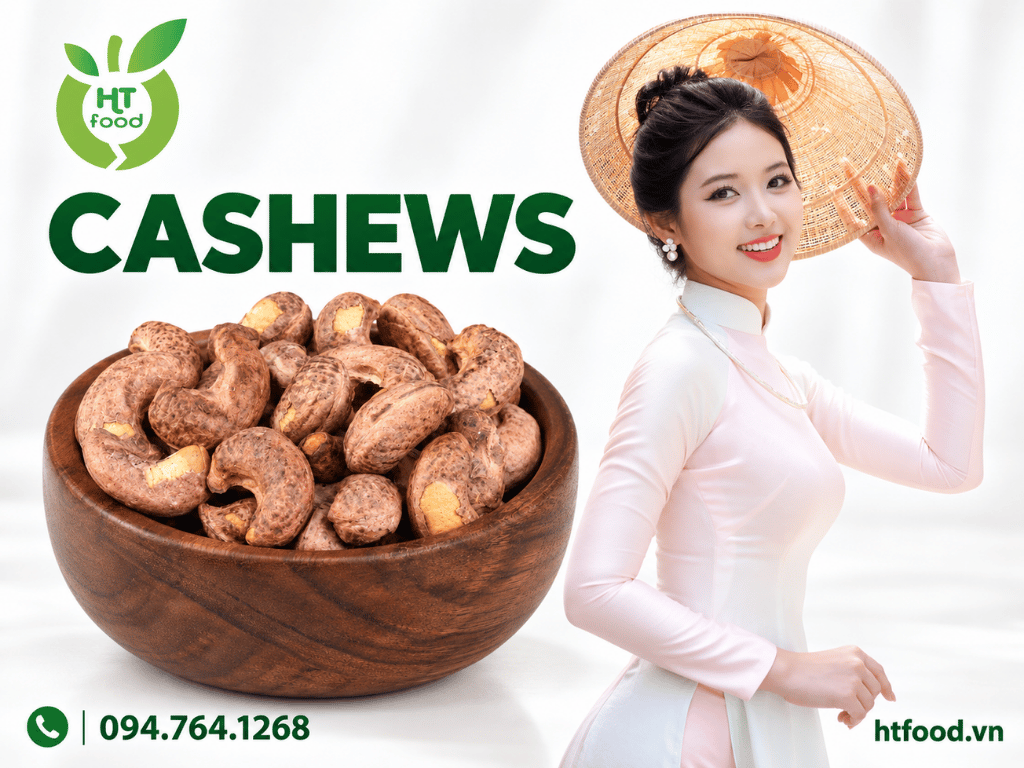
- Plain dry-roasted cashews with a natural flavor: VND 400,000–550,000 per kg.

1. High-quality Vietnamese cashews
Why are Vietnamese cashews known for their outstanding flavor?
Vietnamese cashews are widely appreciated for their rich taste, distinctive crunch, firm kernels, and naturally buttery texture. Their quality comes not only from the cashew variety but also from the soil, climate, farming practices, and processing methods.
Growing conditions that contribute to cashew quality
Binh Phuoc, Dak Nong, and Dong Nai are among Vietnam’s best-known cashew-growing regions. Many areas have mineral-rich red basalt soil, relatively deep topsoil, and good drainage, creating favorable conditions for cashew trees to grow.
Red basalt soil retains nutrients while allowing enough airflow around the roots. Combined with a tropical climate, abundant sunshine, and a clearly defined dry season, these conditions help cashew trees accumulate nutrients as the nuts develop.
The climate of each growing region may also affect the size, firmness, and natural oil content of the kernels. These factors contribute to the distinctive characteristics of Vietnamese cashews.
A rich, buttery flavor and satisfying crunch
One of the main reasons Vietnamese cashews are so popular is their firm texture. When properly roasted, the kernels become crisp, aromatic, and naturally buttery.
Vietnamese cashews have a rich, nutty flavor without feeling overly heavy. Some varieties also have a mild natural sweetness, making them enjoyable on their own or as an ingredient in a wide range of dishes.
Processing also plays an important role. When cashews are handled and roasted at the appropriate temperature, their natural aroma becomes more pronounced while the kernels retain their characteristic crunch.
How are Vietnamese cashews different from imported cashews?
Compared with cashews from many other sources, Vietnamese cashews are often valued for their firm kernels and bold flavor. They may not always be the largest, but properly processed kernels are usually full, crunchy, and distinctly buttery.
Cashews from certain regions in Africa or Cambodia may be larger and visually attractive. However, their flavor, firmness, and natural oil content can vary depending on the variety, growing region, harvesting conditions, and raw material quality.
For this reason, size should not be the only measure of quality. Good cashews should also be evaluated based on kernel firmness, color, crunch, aroma, and flavor after roasting.
The combination of Vietnam’s soil, climate, cashew varieties, and processing techniques has helped Vietnamese cashews establish a strong position in the market. They are widely enjoyed domestically and recognized in many international markets.
2. Types of Vietnamese cashews and how to choose the right one
Vietnamese cashews are available in several grades based on kernel size, shape, and processing method. Each type offers different characteristics for different preferences and uses.
Understanding these classifications can help you choose cashews with the right size, flavor, and preparation style for your needs.
Cashew classifications by size
One of the most common ways to classify cashews is by kernel size. Grades such as W240, W320, and W450 indicate the approximate number of whole kernels in one pound.
The letter “W” stands for “whole.” The number refers to the approximate number of whole cashew kernels per pound, or about 453.6 grams. Therefore, a lower number generally indicates a larger kernel.
- W240: These are large cashews, with fewer kernels per pound than W320 or W450. They have an attractive appearance and firm texture, making them suitable for snacking or giving as gifts.
- W320: This is one of the most common cashew grades on the market. W320 cashews offer a balanced combination of appearance, crunch, versatility, and price. They can be eaten directly, added to recipes, or used as an ingredient.
- W450: These kernels are smaller than W240 and W320 cashews. However, smaller size does not necessarily mean lower quality. When properly processed, W450 cashews can still be crunchy, buttery, and suitable for many uses.
Cashew size mainly reflects the number and dimensions of the kernels. It is not the only indicator of quality. Other factors include wholeness, moisture content, color, aroma, crunch, and processing method.
Cashew classifications by processing method
In addition to size, cashews can be classified according to how they are processed. The same type of cashew kernel can be prepared in different ways to create a variety of flavors.
Salted roasted cashews with the skin on
Skin-on salted roasted cashews are a familiar choice for people who enjoy the natural buttery flavor of cashews combined with a mild salty taste.
These cashews retain their thin outer skin during roasting. The skin creates a light barrier between the kernel and the salt, preventing the surface from absorbing too much salt directly.
The skin also reduces the kernel’s direct exposure to heat and salt during processing. This may help preserve its characteristic aroma and prevent excessive darkening caused by over-roasting.
When eaten, skin-on cashews offer a pleasant combination of a slightly crisp outer layer, a rich kernel, and mild saltiness. They are ideal as an everyday snack or for serving during gatherings with family and friends.
Plain dry-roasted cashews
Plain dry-roasted cashews usually contain no added salt or strongly flavored seasonings. This processing method highlights the natural taste of the cashew kernels.
One advantage of plain roasted cashews is their versatility. They can be eaten as a snack or added to salads, granola, baked goods, plant-based milk, and many other dishes.
They are also suitable for people who want to reduce the amount of salt in their diet. Without heavy seasoning, the cashews’ natural buttery flavor and aroma are easier to appreciate.
Plain roasted cashews also pair well with other ingredients without significantly changing the overall flavor of a recipe.
Flavored cashews
Plain roasted cashews are ideal for people who prefer a natural taste, while flavored cashews are suitable for those who want a bolder or more varied snacking experience.
Popular options include chili garlic, honey, cheese, and other seasoned cashew varieties.
Chili garlic cashews generally have a savory, spicy, and aromatic flavor. Honey cashews offer mild sweetness that balances the kernels’ natural richness.
Cheese-flavored cashews have a creamy, savory profile and may appeal to people who enjoy more distinctive snack flavors.
When choosing flavored cashews, check the seasonings and serving size. Products containing added sugar, salt, or sauces will have a different nutritional profile from plain roasted cashews.
Which type of cashew is the right choice?
There is no single cashew variety that is perfect for everyone. The right choice depends on your preferences, intended use, and budget.
If you prefer larger cashews with an attractive appearance, W240 is worth considering. If you want a popular, versatile size with a good balance between quality and price, W320 may be a better fit.
Plain dry-roasted cashews are suitable for those who prefer a natural flavor and minimal seasoning. Skin-on salted roasted cashews are ideal for people who enjoy mild saltiness, while chili garlic, honey, or cheese varieties offer more adventurous flavors.
Most importantly, do not judge cashew quality by size alone. Good cashews should have firm kernels, a natural aroma, a pleasant crunch, and no stale-oil smell, musty odor, or unusual aftertaste.
Understanding the different cashew grades and processing methods will help you choose Vietnamese cashews for snacking, gifting, baking, cooking, or everyday meals.
3. How much does 1 kg of Vietnamese cashews cost?
The price of Vietnamese cashews can vary depending on their origin, size, processing method, and packaging. When shopping for cashews, you should consider more than the price per kilogram.
Factors that determine the price of 1 kg of cashews
Origin: Cashews grown in regions such as Binh Phuoc and Gia Lai are widely appreciated for their rich, buttery, and aromatic flavor. Raw cashews imported from Africa or Cambodia may be larger, but their flavor and kernel firmness can vary depending on the growing region, variety, and quality of the raw materials.
Kernel size: Grades such as W180, W240, and W320 directly influence the selling price. In general, a lower grade number means a larger kernel. Larger grades such as W180 and W240 are therefore usually more expensive than W320. However, the final price also depends on overall quality and the percentage of whole kernels.
Time of purchase: Cashew prices may fluctuate according to harvest seasons and market demand. Vietnam’s main harvest generally runs from February through May, when fresh raw cashews are more widely available.
Demand for nuts and gift products often increases before Tet, the Vietnamese Lunar New Year. As a result, the prices of certain cashew products may change during this period.
Packaging: The same type of cashew may be priced differently depending on whether it is packaged in a vacuum-sealed bag or a convenient jar with an aluminum lid.
Packaging provides convenience while also affecting storage conditions, presentation, and overall production costs.
Reference prices for cashews at HTFood
At HTFood Vietnam, customers can refer to the following prices:
- Salted or dry-roasted cashews: VND 400,000 per kg.
- Plain dry-roasted cashews with a natural flavor: VND 450,000 per kg.
These prices are for reference only and may change depending on the season, product variety, and packaging option.
When choosing cashews, consider their origin, kernel size, flavor, processing method, and intended use to find the product that best suits your needs.
CONTACT INFORMATION
HT-Food Vietnam Nutrition Nuts
Hotline/WhatsApp: 094.764.1268