Where to buy flavorful, crunchy cashews with confidence!
Cashews have a rich, buttery flavor and can be enjoyed in many ways. They are suitable for snacking, making plant-based milk, preparing meals, or giving as gifts. However, the quality of cashews on the market can vary considerably. Cashews stored for too long may become soft, discolored, or rancid, while heavily salted products can overpower the nuts’ natural flavor.
So, where can you buy cashews with clear product information and options that meet your needs? In addition to choosing a reliable seller, buyers should consider the growing region, processing method, kernel condition, flavor, and packaging.

1. What makes Vietnamese cashews distinctive?
Vietnam is one of the world’s major cashew-processing and exporting centers. According to the Vietnam Cashew Association, Vietnam has maintained its leading position in cashew kernel exports for many years.
However, this does not mean that all cashews processed in Vietnam are grown domestically. Vietnam’s cashew industry uses both locally grown and imported raw cashews. Buyers should therefore avoid assuming that a product’s processing location is also its growing region.
Binh Phuoc is one of Vietnam’s most recognized cashew-growing areas. Cashew trees are also cultivated in several provinces in the Central Highlands and southeastern Vietnam. Climate, plant variety, harvest time, preliminary processing, and roasting methods can all affect the kernels’ texture, color, and flavor.
There is no single visual feature that can reliably distinguish Vietnamese cashews from cashews grown in Cambodia or Africa. Kernel size and shape also depend on the variety, growing season, and grading category. Features such as large kernels, full bodies, or curved tips should only be treated as general observations, not as proof of origin.
Quality cashews usually have a natural cream-to-light-golden color. They should be dry and firm, without musty or rancid odors. When eaten, the kernels should have a pleasant crunch, a rich and mildly sweet flavor, and no harsh or lingering bitterness.
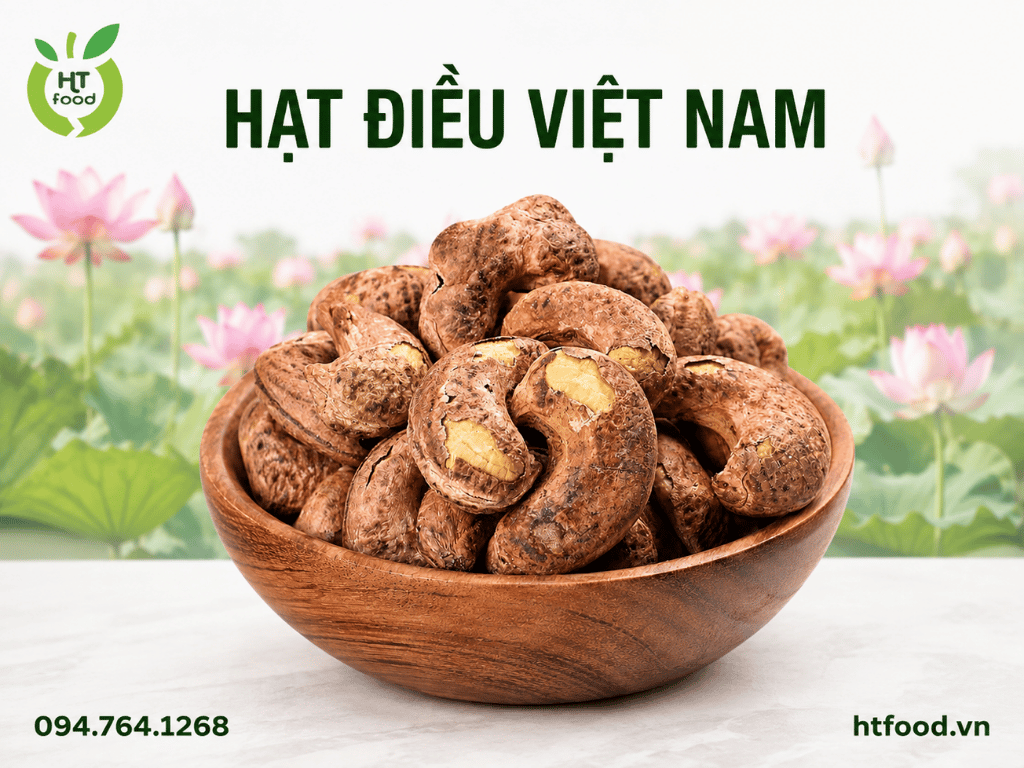
Salt-roasted cashews with their skins intact may have a slightly astringent taste from the thin outer skin. However, they should not taste burnt or smell like overheated oil.
2. Nutritional value and practical ways to enjoy cashews
Cashews provide unsaturated fats, plant-based protein, and several important minerals. They are particularly known for containing copper, magnesium, manganese, phosphorus, and zinc. According to USDA FoodData Central, nutritional values can vary depending on whether the cashews are raw, dry-roasted, oil-roasted, or salted.
Most of the fat in cashews is unsaturated fat. When cashews replace some foods that are high in saturated fat, they can contribute to a heart-conscious eating pattern. The American Heart Association also recommends prioritizing unsaturated fats as part of a balanced diet.
Magnesium and phosphorus contribute to normal bodily functions and help maintain bone structure. Copper plays a role in energy metabolism, connective tissue formation, and cellular protection against oxidative stress. However, cashews should not be presented as a treatment for medical conditions or a substitute for a varied diet.
Their combination of fat, protein, and fiber may help support fullness between meals. Cashews are also calorie-dense, so eating large amounts can significantly increase daily calorie intake. People managing their weight should portion cashews instead of eating directly from a large container.
Cashews can be eaten as a snack or added to oatmeal, salads, and yogurt. They can also be blended into cashew milk or used in sauces and baked goods.
Cashews sold for making plant-based milk are often described as raw cashew kernels. However, they have already undergone processing and shell removal before being sold to consumers.
People limiting their sodium intake may prefer lightly salted or unsalted cashews. Anyone with a tree nut allergy should use caution and consult a qualified healthcare professional when necessary. Cashews served to young children should be ground or cut into age-appropriate pieces to reduce choking risk.
3. How to choose cashews for daily use or gifting
When looking for a cashew seller, check the product name, ingredients, processing method, net weight, variety, and storage instructions. Clear information makes it easier to distinguish among salt-roasted cashews, unsalted roasted cashews, skin-on cashews, peeled kernels, and cashews intended for cooking.
Size alone does not determine quality. Larger kernels often cost more because of their grade, but medium-sized cashews can still be flavorful and crunchy when they are fresh, roasted properly, and stored under suitable conditions.
Good cashews generally have a consistent appearance, minimal broken pieces, and a dry surface. Their natural color can range from ivory to light golden. Unusually white kernels are not necessarily higher in quality.
A rancid odor indicates that the fats in the cashews have begun to oxidize. Cashews that smell like old cooking oil or paint, taste noticeably bitter, or leave an unpleasant aftertaste should not be consumed.
Cashews that are soft but do not smell unusual may have absorbed moisture after being exposed to air. After opening the package, store them in an airtight container in a cool, dry place away from direct sunlight. In hot or humid weather, refrigeration can help preserve their texture and flavor.
Vietnamese cashews can also make a thoughtful gift for friends, business partners, or international visitors. They are convenient to share and represent one of Vietnam’s recognized agricultural products.
When carrying cashews on an international flight, keep them sealed in their original commercial packaging and review the plant-based food import rules of the destination country. Entry requirements vary among countries and territories.
For gifting, choose packaging that is attractive, compact, and easy to transport. The container should clearly identify the type of cashew inside. Presentation matters, but freshness, flavor, and proper storage remain more important than decorative packaging.
4. Where to buy cashews in Hanoi, Vietnam?
Cashews are available from specialty nut stores, supermarkets, online marketplaces, and food distributors. Regardless of the sales channel, buyers should choose a seller that provides clear product descriptions, specific contact information, and helpful guidance based on how the cashews will be used.
HTFood offers several cashew products for everyday snacking, food preparation, and gifting. Available options include salt-roasted skin-on cashews, peeled cashews, and cashew kernels for making plant-based milk, baked goods, and other recipes.
Before placing an order, customers should decide whether the cashews will be eaten directly or used in cooking. They should also consider whether they prefer a natural flavor or light seasoning and whether they need everyday packaging or a gift box. Choosing the appropriate product helps deliver the desired flavor and avoids paying for an option that does not match its intended use.
Customers shopping in person can examine the kernels’ condition, color, and product information. Those ordering remotely should confirm the cashew variety, net weight, packaging format, and estimated delivery time before completing their purchase.
Cashews are nutrient-dense and versatile, but their overall quality depends heavily on the ingredients, roasting process, and storage conditions. For this reason, deciding where to buy cashews involves more than finding a particular address. It also means choosing a seller that makes it easy to understand and compare the available products.
Customers looking to buy cashews in Hanoi or arrange delivery to other areas of Vietnam can contact HTFood for product recommendations based on their intended use.
CONTACT INFORMATION
HT-Food Vietnam Nutrition Nuts
Hotline/WhatsApp: 094.764.1268