Where to buy high-quality Vietnamese cashews in Hanoi?
Vietnamese cashews are widely appreciated for their rich, buttery flavor, crisp texture, and versatility in everyday diets. Beyond being a convenient snack, cashews can also be used in plant-based milk, baked goods, granola, salads, and a variety of clean-eating recipes.
However, cashew quality can vary significantly across the market. Nuts that have been stored for too long or kept under poor conditions may lose their crispness, develop a stale oily smell, or have an unpleasant aftertaste. For this reason, when looking for a reliable place to buy Vietnamese cashews, customers should pay attention to the actual quality of the nuts, the source of the raw materials, the roasting method, and the packaging rather than focusing only on size or appearance.
HTFood offers a variety of cashew products for snacking, cooking, and gifting. Below are some useful points to help you better understand Vietnamese cashews and choose the right product for your needs.
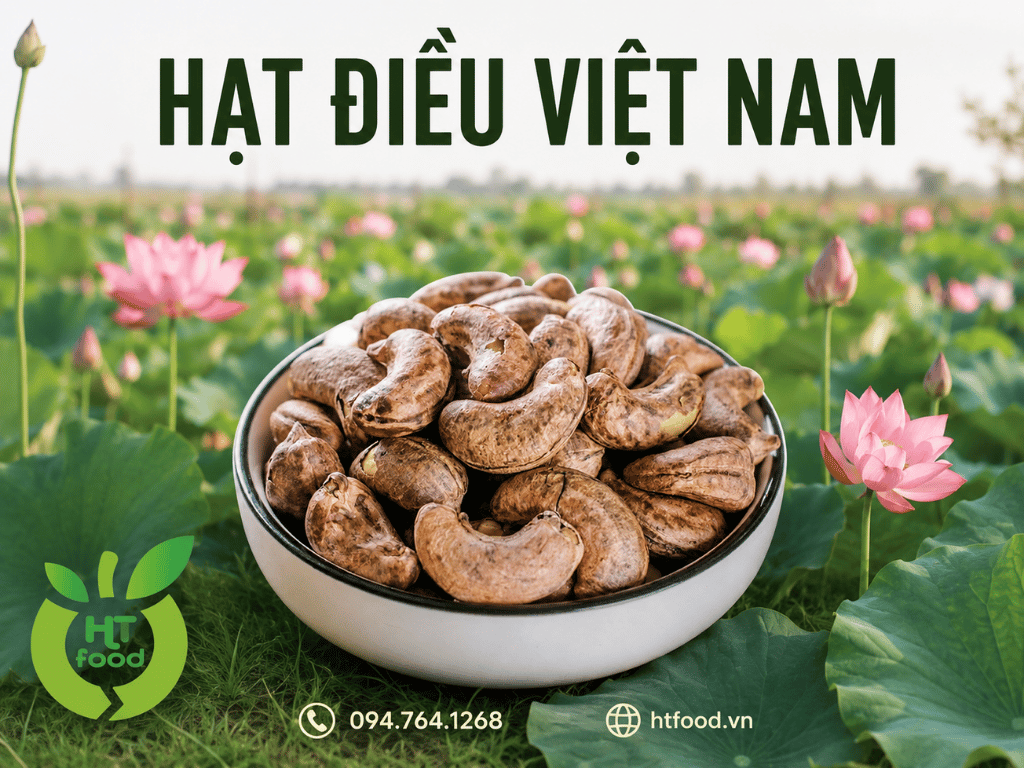

1. Why are Vietnamese cashews so popular?
Vietnam has a well-developed cashew processing industry and is widely recognized for its role in the global cashew market. Within the country, Binh Phuoc is one of the best-known cashew-growing regions and has long been considered an important production area for Vietnamese cashews.
The quality of cashews, however, is not determined by growing region alone. Cashew variety, farming conditions, harvest timing, raw nut quality, and especially processing methods all influence the final product.
Good-quality cashews generally have a firm kernel, a naturally nutty flavor, a pleasant creamy richness, and a crisp texture. When roasted properly, they develop an appealing aroma without tasting burnt or overly dry. For this reason, it is not accurate to judge quality based solely on whether cashews are grown in Vietnam or imported from another country. Even nuts from the same source can vary considerably depending on how they are processed and stored.
From a nutritional perspective, cashews provide fat, protein, carbohydrates, and a range of micronutrients. A large portion of the fat in cashews comes from unsaturated fats. Cashews also contain minerals such as magnesium, copper, phosphorus, and zinc.
Because cashews are relatively energy-dense, they are best enjoyed in reasonable portions as part of a balanced diet. They can be eaten as a snack or paired with yogurt, fruit, cereal, granola, and salads.
2. How to choose a reliable cashew seller and avoid stale or rancid nuts
The sensory quality of the product is one of the most important factors when buying cashews. Fresh cashews that have been properly roasted and stored usually have a mild natural aroma, a nutty flavor, and a crisp bite. A stale oil smell, burnt aroma, unusual bitterness, or soft texture may indicate that the quality has deteriorated.
Color should also be evaluated carefully. Cashew kernels do not need to be bright golden in order to be considered high quality. Depending on the grade and processing method, their natural color may range from white and ivory to light yellow. Nuts with unusually dark areas, suspicious spots, or visible signs of mold should not be consumed.
Size is another factor that many customers consider. Common classifications include W240 and W320. The letter W generally refers to whole white kernels, while the number indicates the approximate number of kernels per pound. A lower number means larger average kernels. Therefore, W240 cashews are generally larger than W320 cashews.
However, larger cashews are not automatically better in flavor or overall quality. For everyday snacking, freshness and roasting quality may matter more than size. W320 is a common and versatile grade, while larger kernels such as W240 are often chosen when appearance and presentation are important.
Packaging also plays an important role in maintaining quality. Cashews contain a significant amount of fat, which means they can be affected by oxygen, heat, moisture, and light. After opening the package, consumers should close it tightly, store it in a cool and dry place, and avoid prolonged exposure to air.
A dependable cashew seller should therefore provide clear information about the type of cashew, roasting method, package size, shelf life, and storage recommendations. These details are more useful to customers than broad marketing claims.
3. HTFood – a source of Vietnamese cashews for everyday use and gifting
Based in Hanoi, HTFood focuses on nutritious nuts and agricultural products suitable for direct consumption, home cooking, and gifting. For cashew products, important considerations include crispness, natural nutty flavor, and suitability for different uses.
Instead of choosing cashews based only on kernel size, customers can select from several product styles, including salted roasted cashews with skin, skinless roasted cashews, unroasted cashew kernels, and flavored varieties.
For products labeled W240 or W320, it is important to understand that these classifications mainly refer to kernel size. W240 cashews are larger and may offer a more premium visual presentation, while W320 is a widely used grade suitable for both everyday snacking and food preparation.
HTFood also offers different packaging sizes to accommodate different purchasing needs. Customers who eat cashews regularly may prefer a package size that matches their normal consumption rate so the product does not remain open for too long.
For gifting purposes, presentation, packaging, and product variety may be more important considerations.
When it comes to cashews, purchasing an appropriate quantity and consuming it within a reasonable period is generally a better approach than storing a large amount for an extended time. This helps preserve the flavor, texture, and overall eating experience.
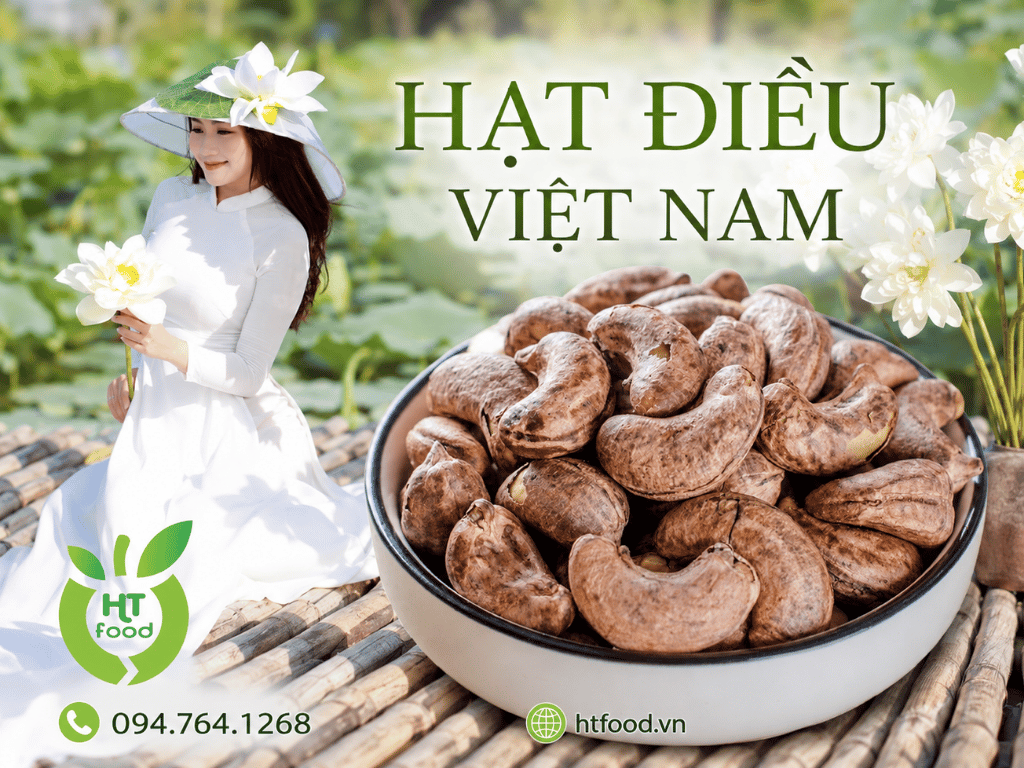
4. Popular cashew products available at HTFood
Salted roasted cashews with skin are a traditional choice for customers who enjoy a more distinctive cashew flavor. The thin skin contributes an additional roasted aroma, while the kernel retains its natural creamy and nutty character. The skin can be removed before eating or enjoyed according to personal preference.
Skinless salted roasted cashews are a convenient option for customers who prefer ready-to-eat nuts. They are suitable for everyday snacks, serving guests, or combining with other nuts and dried fruits.
Unroasted cashew kernels are a practical option for home cooking. This description is more precise than the commonly used term “fresh cashews,” which may be unclear in commercial contexts. Unroasted cashews can be used to make cashew milk, sauces, baked goods, granola, and a variety of other recipes.
Flavored cashews, including garlic chili and cheese varieties, are suitable for customers who prefer a stronger and more distinctive taste. These options work well as casual snacks and offer an alternative to traditional salted cashews. Customers who are monitoring their sodium, sugar, or calorie intake should review the seasoning ingredients and nutritional information before choosing flavored products.
If you are looking for a place to buy Vietnamese cashews in Hanoi, it is worth choosing products based on how you plan to use them rather than focusing only on kernel size. A good cashew product should offer a balance of freshness, flavor, processing quality, packaging, and price.
CONTACT INFORMATION
HT-Food Vietnam Nutrition Nuts
Hotline/WhatsApp: 094.764.1268